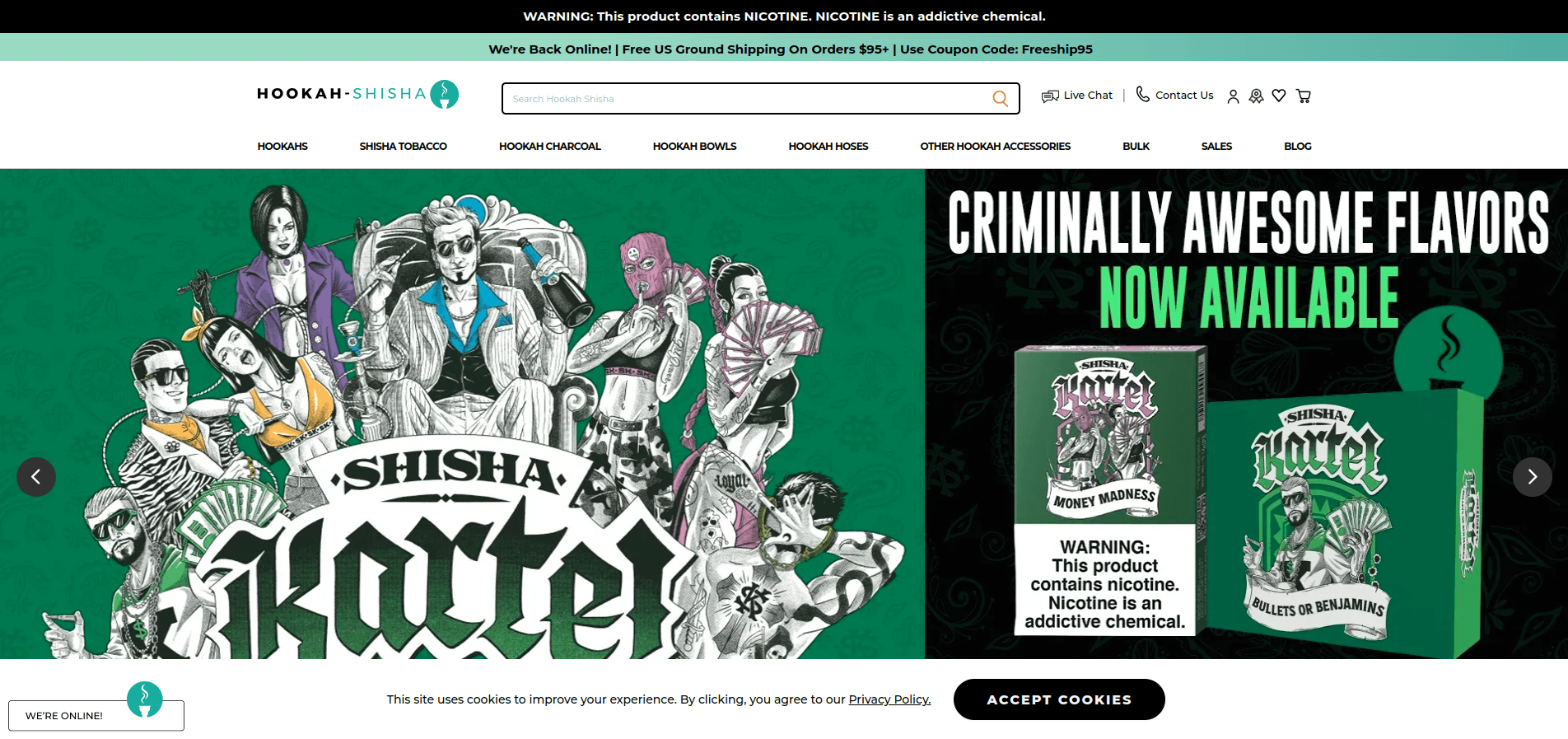
Al Fakher — Multi-Brand E-commerce Monorepo
Built and maintained OOKA, SouthSmoke, and Hookah-shisha as independently branded storefronts sharing a single Next.js codebase — with RTL, Core Web Vitals optimisation, and GraphQL integration.
The Problem
Al Fakher — one of the world's largest shisha tobacco brands — needed to launch and maintain multiple distinct storefronts for different global markets:
- OOKA (
me.ooka.com) — a premium Middle Eastern lifestyle brand for their charcoal-free shisha device - SouthSmoke (
hookah.com) — a US-focused mass-market hookah retailer - Hookah-shisha — a third brand in the same product family
Each store had its own brand identity, design language, and target audience. But they shared the same product catalogue infrastructure, commerce logic, and React component behaviour. Maintaining three separate codebases would mean tripling every feature development and bug fix effort.
My Role
Frontend Engineer at Codilar Technologies (Oct 2021 – Dec 2024). I owned major parts of UI implementation across all three storefronts, led Core Web Vitals optimisation, and contributed to the monorepo architecture decisions.
Architecture Decision — src/ + store/<name>/ Override Pattern
The core architectural idea: a shared base with per-store override layers.
/src                          ← shared components, hooks, logic, styles
  /components
  /hooks
  /pages
  /styles

/store
  /ooka                       ← OOKA-specific overrides
    /components               ← only files that differ from src/
    /styles
      design-tokens.css       ← brand colours, fonts, spacing
  /southsmoke
    /components
    /styles
      design-tokens.css
  /hookah-shisha
    /styles
      design-tokens.css
At build time, the store target is resolved and the /store/<name>/ files take precedence over their /src/ counterparts — same folder structure, so a component override is just a file drop-in. Stores with identical behaviour for a given component simply don't include an override; they inherit from src/ automatically.
This meant:
- One PR fixes a shared bug across all three stores
- Brand-specific work is isolated — a design change for OOKA never accidentally touches SouthSmoke
- New stores can be onboarded by creating a new
/store/<name>/folder with design tokens and only the components that actually differ
RTL Support
OOKA targets Arabic-speaking users in the Middle East. I implemented bidirectional layout support (LTR/RTL) within the shared component layer:
- CSS logical properties (
margin-inline-startinstead ofmargin-left) used throughout shared components so RTL flips automatically dirattribute toggled on the HTML root based on locale- Store-specific design tokens handle Arabic typography (font-family, line-height adjustments)
- Tested against Arabic (
ar) locale onme.ooka.com
GraphQL Integration
All storefronts fetched product, catalogue, and cart data via GraphQL. I built and maintained:
- Shared query fragments for product listings, PDPs, and cart operations
- Per-store variable overrides where store context changed the query shape (e.g., currency, region-specific inventory)
- Optimistic UI updates for add-to-cart to keep the interaction fast regardless of API latency
Core Web Vitals Optimisation
High-traffic e-commerce on Next.js means LCP and CLS are the metrics that directly affect conversion. Improvements I made:
- LCP: Moved hero images to
priorityNext.js<Image>with explicitwidth/heightto eliminate layout shift; preloaded critical fonts - CLS: Audited and fixed all dynamic content areas (cart badge, promotional banners) that were shifting layout after hydration; replaced absolute positioning hacks with reserved space using
min-height - Code splitting: Lazy-loaded below-the-fold components (testimonials carousel, social gallery) to reduce initial JS bundle size
Outcome
- Three live production storefronts maintained from a single codebase
- LCP and CLS scores improved across storefronts after the Core Web Vitals push
- OOKA launched with full Arabic RTL support at go-live
- New brand theming onboarded by dropping design token files — no shared component changes required