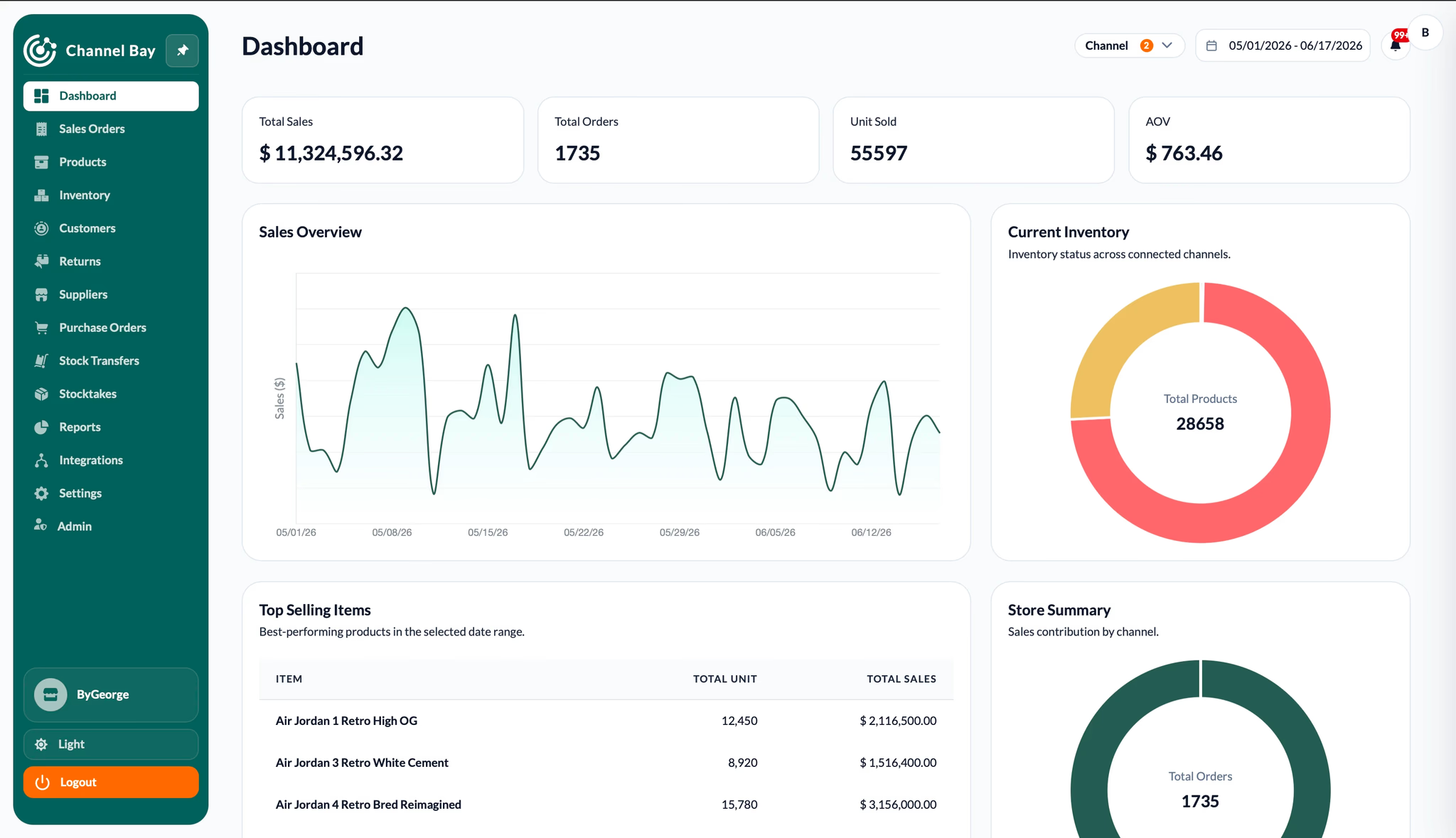
Channelbay — Shopify Inventory Management App
Built the frontend UI for a multi-channel inventory management platform on the Shopify App Store — ERB templates, reusable Ruby view helpers, and SCSS/JS component interactions.
The Problem
Channelbay is a multi-channel inventory management platform available on the Shopify App Store. It lets merchants centralise stock tracking, purchase orders, and inventory adjustments across Shopify, Amazon, retail locations, and warehouses — replacing manual spreadsheet workflows.
The frontend challenge: this is an internal B2B tool (vendor and Shopify admin POV), not a consumer storefront. The UI needs to be dense, data-rich, and highly interactive — dashboards, filterable tables, stock alert panels, PO management screens — while remaining fast and maintainable within a Ruby on Rails ERB architecture.
My Role
Frontend Engineer at Dayspring Technologies (Jan 2025 – Present). I owned the ERB template layer, built reusable Ruby view helpers, and implemented SCSS and JavaScript for UI component interactions.
Stack
- Ruby on Rails — application framework
- ERB (Embedded Ruby) — server-rendered HTML templates
- SCSS — component-scoped styling
- JavaScript — UI interactions (modals, dropdowns, inline edits, table filters)
- Tailwind CSS — utility-first layout and spacing (custom system inspired by Tailwind conventions)
- Shopify App Bridge — integration layer for embedding within Shopify admin
ERB Templates
Rather than a single-page React app, Channelbay's UI is built with server-rendered ERB templates — each page or partial is an .erb file that Rails renders with real data before the browser receives it. This means:
- Fast initial render — no JS bundle required before content appears
- Simpler data flow — no separate API layer between the frontend and application state
- Template composition via Rails partials and layouts
I built and maintained the template structure for key screens: inventory overview, per-product stock detail, purchase order creation/edit, adjustment history, and stock alert configuration.
Reusable Ruby View Helpers
The equivalent of React hooks in this stack are Ruby view helpers — reusable Ruby methods defined in app/helpers/ that encapsulate UI logic, HTML generation, or data transformation used across multiple templates.
I wrote helpers for:
- Rendering status badges — a single helper that takes a status string and returns the correct HTML with the right CSS classes (green for in-stock, amber for low-stock, red for out-of-stock)
- Formatting inventory numbers — localised number formatting, units, and "N/A" fallbacks in one place rather than duplicated across every template
- Building filterable table headers — a helper that renders sortable column headers with the correct
data-attributes and aria labels for the JS sort handler to pick up - Conditional class composition — similar to
clsx, but as a Ruby helper: takes a hash of condition → class string and returns the joined result
These helpers follow the same principle as React custom hooks — extract repeated UI logic, name it clearly, use it everywhere.
SCSS / Component Interactions
For a data-dense B2B tool, interaction quality matters:
- Inline editing: clicking a stock quantity opens an inline input in place;
blurandEntertrigger save;Escapecancels — all handled with vanilla JS event listeners scoped to the component - Filterable tables: JavaScript-powered column filters with URL query param sync so filtered views are shareable/bookmarkable
- Expandable rows: PO line items collapse/expand with CSS transitions driven by a
data-expandedattribute toggle - Stock alert modals: accessible modal pattern (focus trap,
Escapeto close, backdrop click dismiss) implemented without a library
SCSS is organised per-component with BEM-like naming, using SCSS variables for the design token layer (colours, spacing, border-radius) to keep the visual system consistent as new screens are added.
Performance
Even for an admin tool, sluggish page loads erode trust. I reduced average page load time by 2 seconds by:
- Auditing Rails partial rendering — removing N+1 template includes that were fetching data per-row in large inventory tables
- Lazy-loading heavy chart/graph panels (Highcharts-based dashboards) only after the primary table content had rendered
- Deferring non-critical JavaScript (tooltip initialisation, analytics) to
DOMContentLoadedrather than blocking render
Outcome
- Live on the Shopify App Store serving merchants managing multi-channel inventory
- Reusable view helper library reduced duplicated template logic across the codebase
- 2-second page load reduction on high-row-count inventory screens
- Accessible, interactive component patterns implemented without adding JS framework overhead